
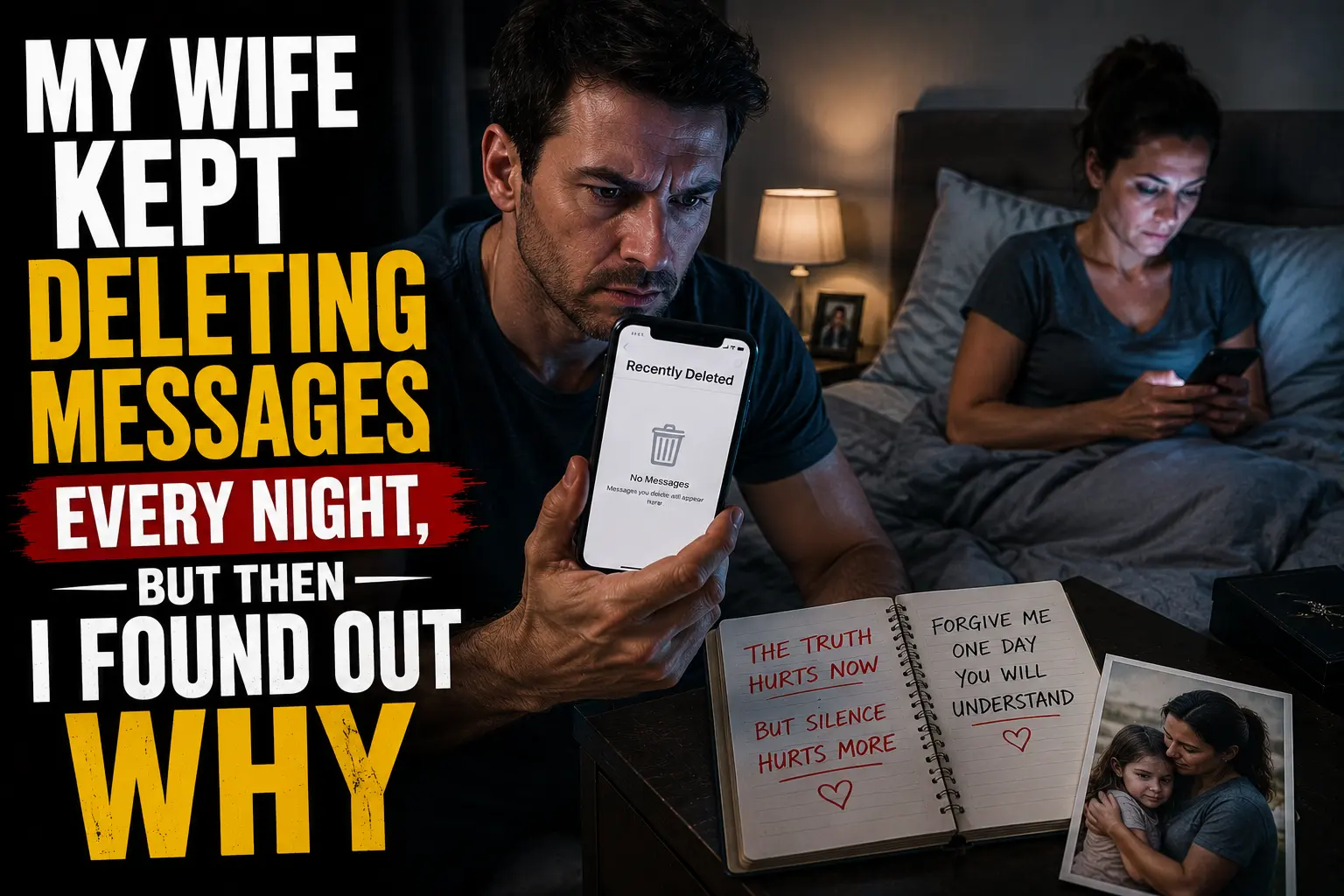
Every night, my wife deleted entire conversations before coming to bed. Then she acted like I was paranoid for noticing. I assumed the worst until I discovered the truth—and somehow, it created an even bigger problem. My wife and I had always respected each other’s privacy. We never demanded passwords or searched each other’s phones. At first, I only noticed that her message history seemed unusually empty. Then I started seeing notifications disappear moments after she read them. Whenever I casually asked, she said she hated clutter and regularly cleaned old conversations. I wanted to trust her, so I accepted the explanation. Looking back, I handled my growing suspicion badly. Instead of clearly telling her how much the secrecy was affecting me, I stayed quiet, watched more closely, and let every unanswered question turn into another story in my head.
The nightly deletions became impossible to ignore. She started turning her screen away, leaving rooms to answer certain calls, and getting defensive whenever I mentioned her phone. Friends reminded me secrecy didn’t automatically mean cheating, while my family encouraged me to trust my instincts. Instead of having a direct conversation, I started checking notification previews and watching when she went online. Eventually, I crossed a line. I guessed her phone passcode and secretly opened it one night while she was asleep. I knew it was wrong, but I told myself I deserved answers. I found almost nothing because the conversations were already gone. My behavior made me more obsessive, not less suspicious. Then I noticed the same unfamiliar contact appearing repeatedly before the messages disappeared. I decided I needed to know who was behind it.
The contact belonged to a debt counselor. My wife had significant personal debt she’d hidden before and during our marriage. She’d been deleting messages because she feared I’d discover how much she owed and see her differently. I felt relieved there wasn’t an affair, then immediately angry because her secret could still affect our entire future. I wasn’t married to a cheater, but I was married to someone who had hidden a financial reality from me. Then came the harder realization: I had violated her privacy instead of confronting my fears honestly. Neither of us could claim complete innocence anymore.
I scheduled a meeting with a financial counselor and told my wife I would only continue combining our finances if we attended together and disclosed every debt, account, and obligation. Then I admitted exactly how I’d accessed her phone. She stared at me and said, “You invaded my privacy and now you’re giving me conditions?” I answered, “You hid a debt that affects both of us. I’m done pretending either secret is harmless.” When she initially refused the meeting, I temporarily separated my income from our shared spending account. If honesty required an ultimatum, then our marriage was already in deeper trouble than either of us wanted to admit.
My family supported demanding financial transparency but criticized me for secretly accessing her phone. Friends were divided. Some believed hidden debt justified immediate financial protection, while others said I’d responded to secrecy with more secrecy. My wife admitted hiding the debt was wrong but accused me of turning her fear into an ultimatum. Our counselor refused to treat either of us as the only victim. That was difficult to hear, but accurate. For the first time, we had to confront how her avoidance and my suspicion had slowly turned our marriage into a place where neither of us felt safe telling the truth. We started rebuilding our finances, but rebuilding trust has been much harder. I still believe protecting myself financially was necessary, yet I can’t pretend invading her privacy and forcing disclosure didn’t cause damage of its own. Looking back, I’m still not sure I handled it right.