
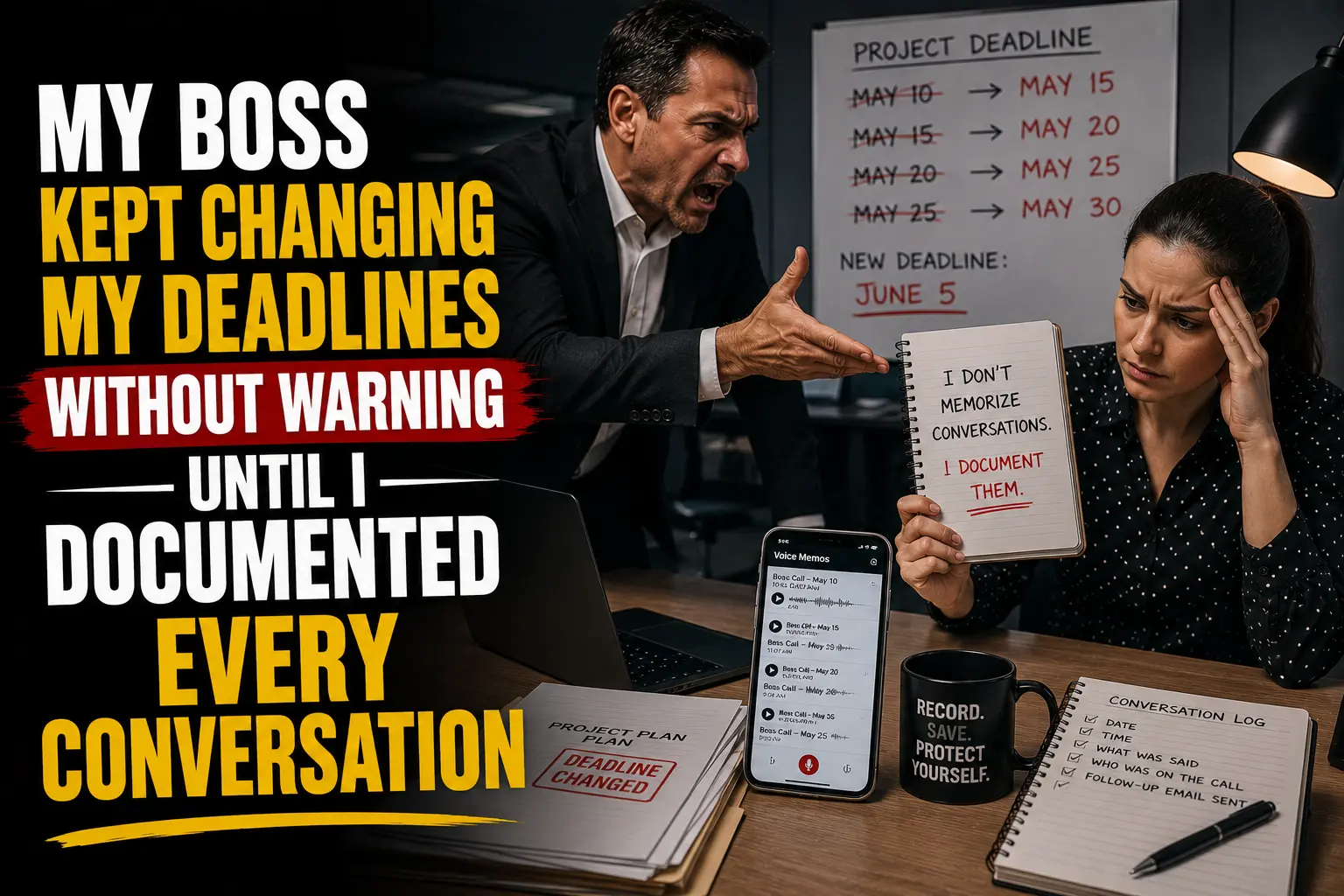
My boss kept changing my deadlines, then blaming me for missing dates I was never originally given. Everyone thought I was making excuses. Then I documented every conversation, and one meeting changed everything. When I joined the team, my boss seemed demanding but organized, so I trusted verbal instructions without questioning them. At first, deadlines only shifted occasionally because priorities genuinely changed. Over time, my boss started moving due dates forward, then insisting they’d always been that way. I worked late trying to keep up and rarely challenged the changes. Coworkers began assuming I had terrible time management. Looking back, I made a basic mistake. I relied on memory and verbal agreements instead of confirming important deadlines in writing. I kept believing hard work would protect my reputation, even while the story around me was becoming more important than the actual work.
The deadline changes became more frequent and damaging. My boss would assign something for Friday, demand it Wednesday morning, then claim I’d misunderstood. During meetings, they criticized my reliability while presenting themselves as the person constantly fixing my mistakes. Friends encouraged me to speak with HR, but I worried I had no evidence. My family noticed I was working late and becoming increasingly defensive. Instead of staying professional, I made things worse. I snapped at coworkers who asked about delayed projects and complained openly about my boss. That damaged my credibility and made me look difficult to work with. Finally, I changed my approach. After every conversation, I sent a follow-up email summarizing deadlines, responsibilities, and changes. I kept a dated log of verbal instructions too. Within weeks, the pattern was impossible to dismiss. Dates changed. Expectations shifted. And every written confirmation contradicted what my boss later claimed.
The breaking point came during an important project review. My boss publicly accused me of missing another deadline and suggested formal disciplinary action. My first instinct was to argue, but I realized defending myself emotionally would only reinforce the image they’d created. I also had to admit my earlier complaints and angry reactions had made it harder for coworkers to separate facts from frustration. I wasn’t the unreliable employee everyone had been told I was, but acting angry had made that lie easier to believe. This time, I had documentation. My realization was simple: I didn’t need to win another argument. I needed the timeline to speak.
Instead of confronting my boss privately, I asked senior leadership to review the project history during the same meeting. I displayed the original deadline confirmation, every later change, and my boss’s written acknowledgments in chronological order. The room became painfully quiet. My boss interrupted and said, “You’re deliberately making me look incompetent.” I replied, “I’m showing the dates you gave me. If they make you look bad, that’s not something I created.” Then I requested that all future deadlines and performance concerns involving me be documented through official channels. I stopped defending my memory the moment I could prove the truth.
My family supported me but questioned why I’d waited so long to protect myself. Friends were divided. Some praised the documentation, while others believed I’d intentionally cornered my boss in front of leadership. My partner agreed the evidence cleared my name but worried the public confrontation could damage my career. My boss accused me of creating a hostile working relationship. Leadership rejected the disciplinary action and introduced written deadline confirmations for the entire team. Even coworkers who had doubted me couldn’t agree whether I’d exposed unfair treatment or escalated a problem that should have gone through HR first. My reputation recovered, but my relationship with my boss never did. I know documenting everything protected my career, yet I still question whether revealing it publicly was necessary—or whether I turned a management problem into a workplace battle. Some say I went too far. What would you have done?