
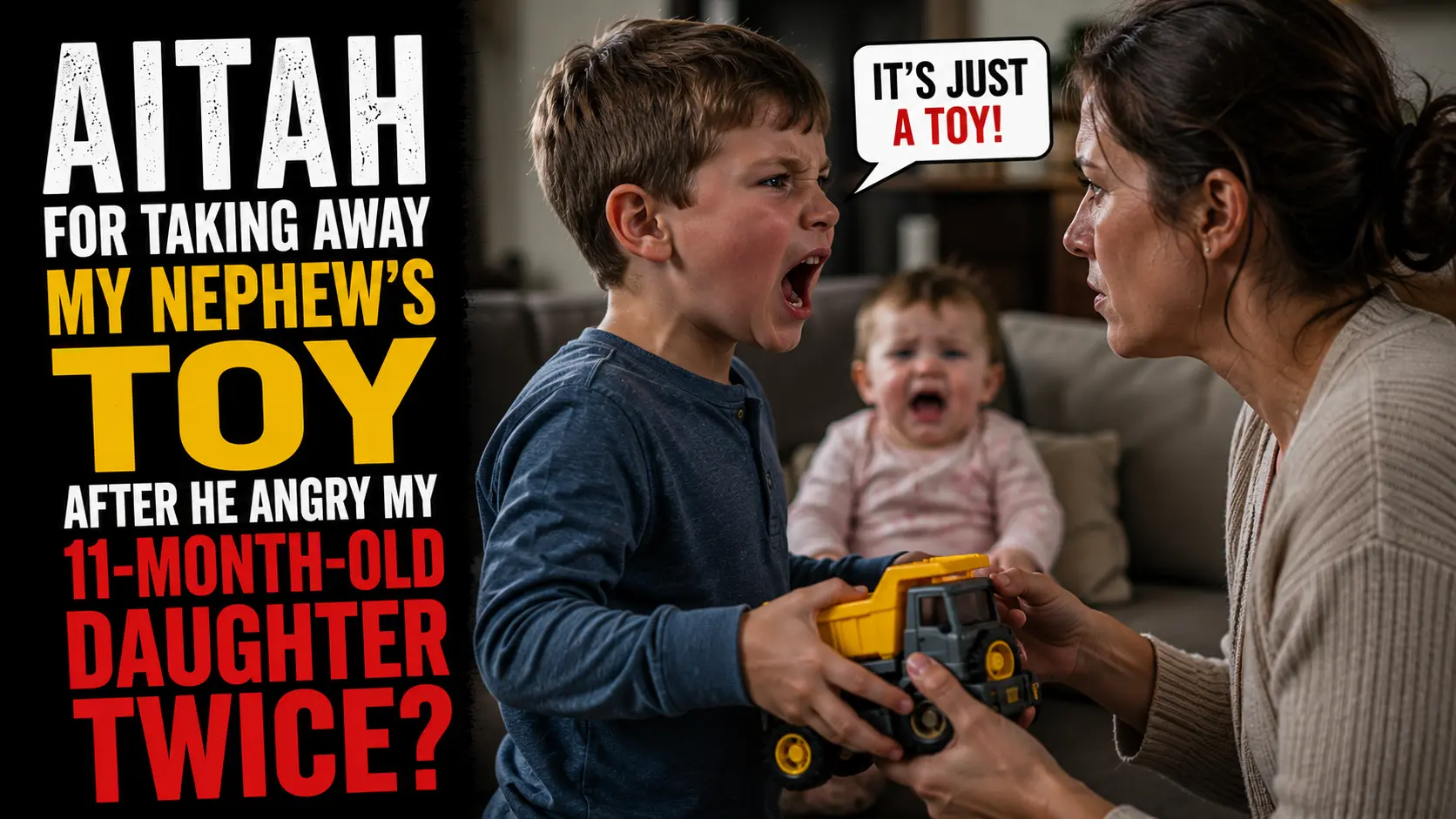
My wife and I recently hosted her sister, brother-in-law, and their two young children while they visited from Korea for about six weeks. We were excited to have them stay with us and wanted the visit to be enjoyable for everyone.
Their oldest child is a three-year-old boy.
He’s energetic, curious, and full of personality, but from the moment they arrived, it became clear that he rarely listened to his parents. Whenever he was told “no,” he usually ignored it, laughed, or simply continued doing whatever he wanted. His parents would calmly explain why something wasn’t okay, but there never seemed to be any consequences if he ignored them.
I’m not claiming to know everything about parenting.
Every child is different, and I know toddlers are still learning how to regulate their emotions and behavior. Still, after watching him for weeks, I couldn’t shake the feeling that he wasn’t learning that certain actions have consequences.
The first serious incident happened when my 11-month-old daughter crawled over to him while they were both playing.
I was watching from nearby.
She sat down in front of him, smiled, and before anyone else even noticed what was happening, he suddenly punched her directly in the face.
She immediately burst into tears.
I expected his parents to respond firmly.
Instead, his mother gently explained that the baby was little and that hitting wasn’t nice.
A few minutes later, she took him upstairs and read him a book.
Maybe that wasn’t intended as a reward, but from where I was standing, it certainly looked like he’d gone from hurting someone to receiving one-on-one attention doing something he enjoyed.
That left me uncomfortable, but I kept my thoughts to myself.
A few days later, something similar happened again.
My older child has an old toy kitchen that everyone agreed the three-year-old could play with while they were visiting.
He was happily playing with it in the living room when my daughter crawled over and started touching one side of it.
This time, I could immediately tell he didn’t want to share.
Before anyone else reacted, he punched her in the face again.
At that point, I stepped in.
I walked over, removed the toy kitchen, looked at him, and calmly said, “No more kitchen for you.”
Predictably, he started crying.
His parents picked him up and took him outside to the playground to calm him down.
Not long afterward, my wife confronted me.
She was clearly upset.
She told me I didn’t understand what it was like raising two small children close in age and said he was “just a little boy.”
I admitted that maybe I didn’t fully understand every parenting challenge they faced.
But I also told her something I genuinely believed.
I said this was the second time he’d hit our daughter, and from my perspective, nobody had shown him that hurting someone meant losing privileges.
She told me disciplining him wasn’t my place.
That’s when I responded, probably louder than I should have.
I said, “It absolutely is my place. This is my house, that’s our toy, and this is the second time he’s punched my daughter. If his parents aren’t going to give him consequences, then I will.”
The room immediately became tense.
Everyone heard what I said.
The conversation ended awkwardly, and the atmosphere for the rest of the day felt strained.
Since then, I’ve kept wondering whether I handled the situation the wrong way.
I don’t believe three-year-olds are malicious.
I know they’re still developing emotionally and often act impulsively.
I’m also not saying children should be punished harshly.
But I do believe they need clear, immediate consequences when they repeatedly hurt someone—especially a baby who can’t defend herself.
Looking back, maybe I should have spoken privately with his parents instead of saying it in front of everyone.
Maybe taking away the toy wasn’t my decision to make.
On the other hand, it happened in my home, involved my daughter, and it was the second time she’d been hit without any meaningful consequence.
My priority in that moment wasn’t proving a point.
It was protecting my child and making it clear that hurting her wasn’t acceptable.
I genuinely don’t know whether I crossed a line by stepping in, or whether I simply did what any parent would do after watching their baby get hurt twice.
AITAH for taking away the toy after my nephew punched my 11-month-old daughter a second time because I felt his parents weren’t addressing the behavior?