
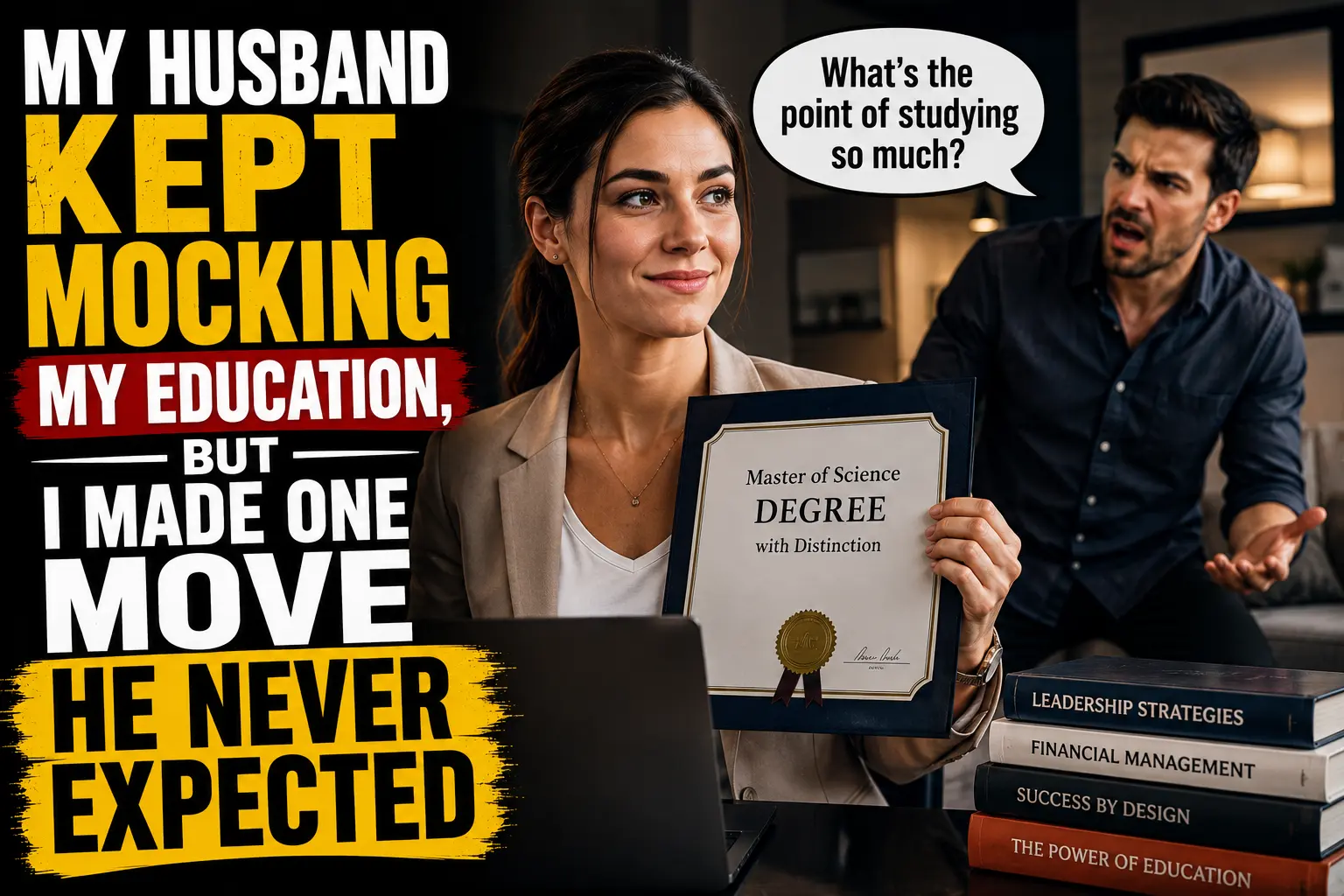
My husband never missed a chance to remind people that he was more educated than me, especially when he wanted to win an argument. I tolerated it for years until I made one move he never expected. When we married, my husband had an advanced degree while I had left college early because of financial and family responsibilities. At first, our different educational backgrounds didn’t matter. Gradually, though, he started correcting me in front of friends, dismissing my opinions, and joking that certain conversations were “above my level.” I laughed along because I didn’t want anyone thinking I was insecure. Looking back, I wasn’t handling it well either. I became defensive whenever education came up and sometimes rejected reasonable advice simply because it came from him. My resentment grew quietly, and instead of addressing the disrespect, I let it poison the way we communicated.
His jokes became more personal and public. At family dinners, he’d mention his qualifications, then laugh about how I was the one who had “married up.” When I suggested financial ideas or career plans, he demanded evidence like I was defending a thesis. Friends noticed the imbalance but rarely challenged him. My family encouraged me to finish my education, partly for myself and partly because they were tired of watching him belittle me. Instead of confronting my husband, I made a questionable choice. I secretly enrolled in an online degree program and told almost nobody. I used household savings I personally controlled to cover part of the tuition without discussing it with him, even though we normally consulted each other about significant expenses. For years, I studied late at night, completed assignments in secret, and let him believe I’d accepted his opinion of me.
Shortly before graduation, he mocked my education again during dinner with relatives and said I probably wouldn’t understand a discussion about business. Everyone went awkwardly quiet. Sitting there, I realized earning a degree wouldn’t automatically fix the disrespect in our marriage. I wasn’t an uneducated woman trying to prove I was smart. I was a wife demanding to be treated as an equal. But I also had to admit I’d hidden a major financial and personal decision because I wanted the satisfaction of surprising him. That made my own behavior harder to defend. My realization was simple: we’d both stopped trusting each other long before either of us admitted it.
Instead of confronting him privately, I invited both families to my graduation ceremony without telling my husband why we were attending. When my name was called, I walked across the stage and accepted the degree I’d spent years earning in secret. His face completely changed. Afterward, in front of everyone, I looked at him and said, “You don’t get to use my past to make yourself feel superior anymore.” Then I told him I would never again remain in a marriage where my intelligence was treated as a joke. I earned the degree for myself, but I made sure he watched me collect it.
My family celebrated my achievement but questioned why I’d hidden such an important part of my life for years. Friends were divided. Some praised the reveal, while others said I’d turned graduation into public revenge. My husband accused me of financial dishonesty and deliberately humiliating him. He apologized for some of his comments but insisted my secrecy proved we’d both stopped behaving like partners. Even our closest friends couldn’t agree whether I’d reclaimed my dignity or exposed how unhealthy our marriage had become. I earned the education he used to mock me for lacking, but the degree couldn’t tell me whether our marriage deserved another chance. I was proud of what I’d accomplished, yet I couldn’t pretend secrecy and public humiliation were harmless just because I had been hurt first. Tell me honestly—did I cross a line, or did they deserve it?