
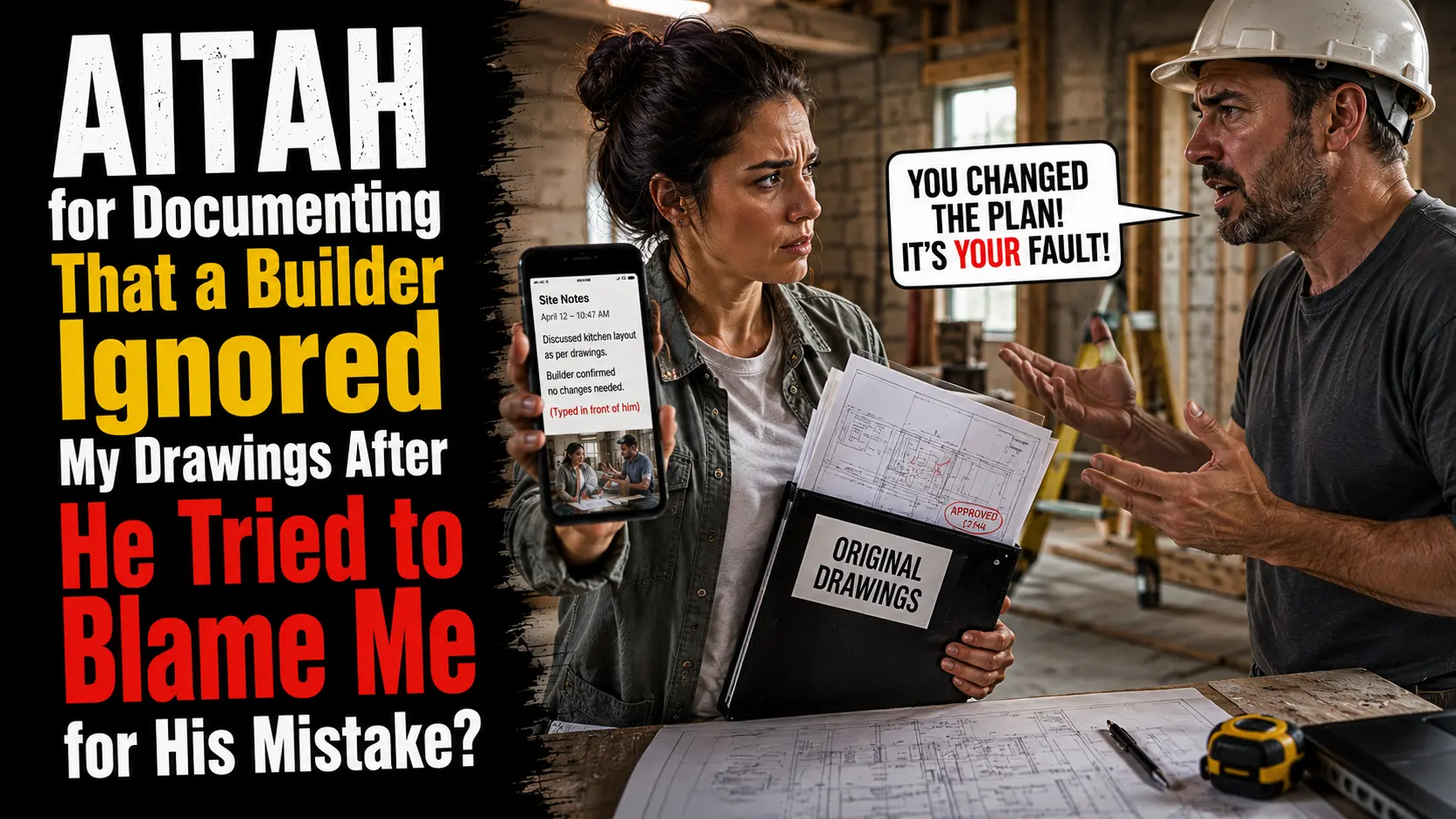
I work as a civil engineer, and a big part of my job is making sure construction work follows the approved design. Most days, that means coordinating with contractors, answering questions, and helping solve problems before they become expensive mistakes.
A few weeks ago, one of the builders on a project was under serious pressure to get a set of concrete foundations poured as quickly as possible.
To help keep the project moving, I arrived at work early and finished revising the foundation drawings before the crew started.
As soon as they were complete, I called the builder to let him know I’d finished the revisions and was emailing the updated drawings over immediately.
Instead of waiting for the email, he asked me to explain the changes over the phone.
I gave him a brief summary, but I was very careful with my wording.
In fact, I repeated the same instruction three separate times.
I told him that my explanation was only an overview and that he absolutely needed to wait for the revised drawings and build from those—not from my verbal description—because I didn’t want any misunderstandings.
The updated drawings were emailed only a few minutes later.
Later that day, I arrived on site expecting everything to be underway.
Instead, I immediately noticed something was wrong.
The foundations had already been built, and they didn’t match the revised design.
I asked the builder whether he’d looked at the drawings before starting.
His answer completely caught me off guard.
He said, “No. I trusted what you told me on the phone.”
Before I even had a chance to respond, he began blaming me.
He questioned my qualifications, insisted my engineering calculations were wrong, and became so angry that his second-in-command had to step in and calm him down before the situation escalated further.
Once things settled slightly, I calmly explained exactly what I’d told him during our phone call.
I reminded him that I’d repeatedly instructed him to wait for the drawings before beginning construction.
Even though the mistake wasn’t mine, I still wanted to help.
Rather than immediately telling him the foundations had to be demolished, I said I’d go back to the office, run the structural calculations, and see whether I could modify the design to make what he’d already built work safely.
Instead of appreciating that, he demanded an immediate answer and launched into another rant about engineers taking too long.
Back at my desk, I spent several hours recalculating loads and redesigning parts of the foundation.
Thankfully, I found a safe engineering solution that avoided tearing everything out and rebuilding it.
Afterward, I sent my normal follow-up email documenting the outcome.
Because of how aggressively he’d tried to shift the blame onto me, I also included a factual record of what had happened.
I noted that I’d instructed him multiple times to wait for the revised drawings, that he chose to proceed without reviewing them, and that he also hadn’t sent the site photos he’d previously agreed to provide.
I didn’t exaggerate anything.
I didn’t insult him.
I simply documented the facts in case questions came up later.
When I returned to the site on my next visit, I noticed someone else running the job.
I asked where the previous foreman was and was told he’d been let go.
That immediately made me wonder whether my email had contributed to that decision.
Part of me feels guilty because I know documentation like that can influence how management views an incident.
At the same time, another part of me thinks he may have already been on thin ice. His reaction that day was unprofessional, he ignored written engineering documents, refused to follow clear instructions, and then tried to pin the consequences on someone else instead of accepting responsibility.
Construction mistakes can have serious safety implications, and accurate records exist for exactly that reason.
I never asked for him to be disciplined.
I never reported him with the goal of getting him fired.
I simply recorded what actually happened to protect myself and ensure there was an accurate account of the incident.
Now I’m left wondering whether I should feel responsible for what happened afterward—or whether documenting the truth was simply part of doing my job.
AITAH for putting the facts in writing, even though it may have played a role in him losing his job?