
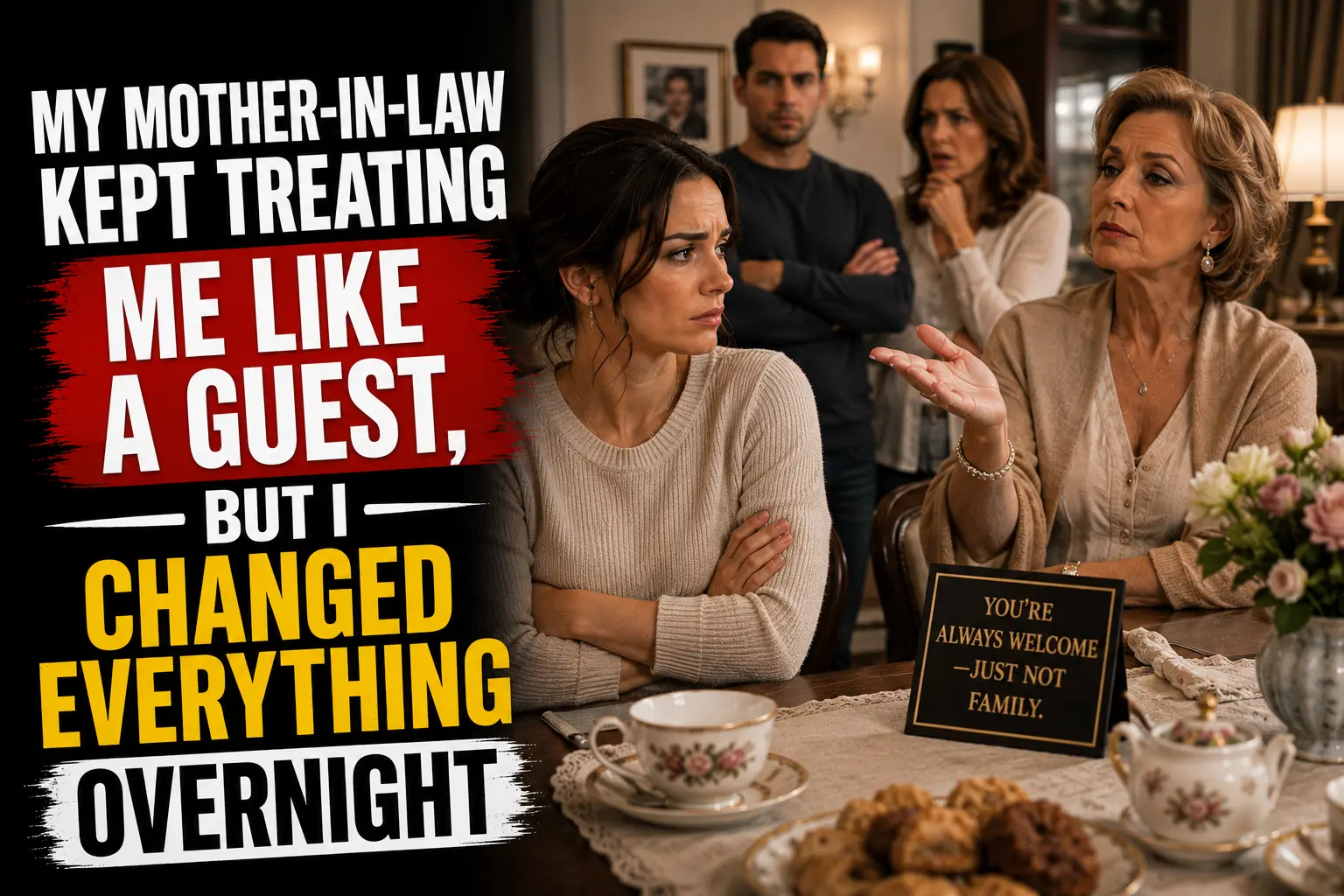
No matter how many years I had been married, my mother-in-law acted like I was only visiting. I was welcome to attend—but never to belong. I stayed respectful for years until one unexpected decision changed everything almost overnight.
When I married my spouse, I truly hoped to build a close relationship with my in-laws. My mother-in-law was never openly rude. Instead, her comments were small enough that everyone else could pretend they meant nothing. She introduced me as “my son’s spouse” instead of family, made important plans without asking my opinion, and treated my thoughts as optional. My spouse usually whispered, “Just ignore it. She’s old-fashioned.” I wanted to believe acceptance would come if I stayed patient and respectful. Looking back, I made a mistake. I stayed quiet because I thought earning my place would be easier than asking for it. Instead, my silence made her behavior seem completely normal.
The exclusions became more obvious every year. During family visits, I was given the guest room while blood relatives stayed together. Holiday plans were announced without anyone asking whether my spouse and I already had commitments. Whenever family decisions came up, my mother-in-law spoke directly to my spouse as if I weren’t even sitting beside them. Friends noticed I always came home from family gatherings looking emotionally drained. My own family gently told me to stop chasing approval that never seemed to arrive. Instead of addressing the issue honestly, I handled it badly. I started declining invitations at the last minute, inventing excuses, and avoiding family events whenever I could. My spouse became frustrated because they thought I was creating unnecessary tension. All I was really doing was making the misunderstanding worse. Eventually, I realized I had spent years waiting to be welcomed instead of expecting to be treated like an equal adult.
The breaking point came during a family celebration. My mother-in-law smiled at another relative and said, “Let’s make sure our guest is comfortable,” while pointing directly at me. We’d been married for years. The room filled with awkward laughter, and my spouse said nothing. That silence hurt almost as much as the comment itself. In that moment, I realized I was waiting for someone else to give me a place that was already mine. I also admitted I’d spent years pretending her words didn’t matter, which convinced everyone else they didn’t matter either. This is my family too. I decided my next move wouldn’t depend on anyone’s permission.
Instead of arguing with my mother-in-law, I had a long conversation with my spouse that evening. I told them that from now on, we’d host every major family gathering at our own home. Everyone would be welcome, and everyone would be treated equally. But I would no longer attend events where I was introduced or treated like an outsider. There would be no exceptions. My spouse hesitated and asked, “Isn’t this a little extreme?” I answered, “I’m not asking to be treated like family anymore. I’m expecting it.” That boundary wasn’t open for negotiation, even though I knew some relatives would accuse me of trying to take over family traditions.
My family fully supported the decision and said I’d finally stopped accepting quiet disrespect. Friends were divided. Some thought the boundary was healthy, while others believed I had escalated something that could have been resolved privately. My spouse admitted they should have defended me much sooner but worried the sudden change would permanently damage their relationship with their mother. My mother-in-law accused me of dividing the family, yet several relatives quietly admitted they had noticed her behavior for years and simply never spoke up. Before long, the disagreement wasn’t about holiday traditions anymore. It was about respect and whether marriage truly makes someone part of a family.
Family gatherings look very different now, even if some relationships are still distant. I finally feel like I’m standing where I belong, but I still wonder whether claiming that place so firmly healed an old problem—or created a new one.
Tell me honestly — did I cross a line, or did they deserve it?