
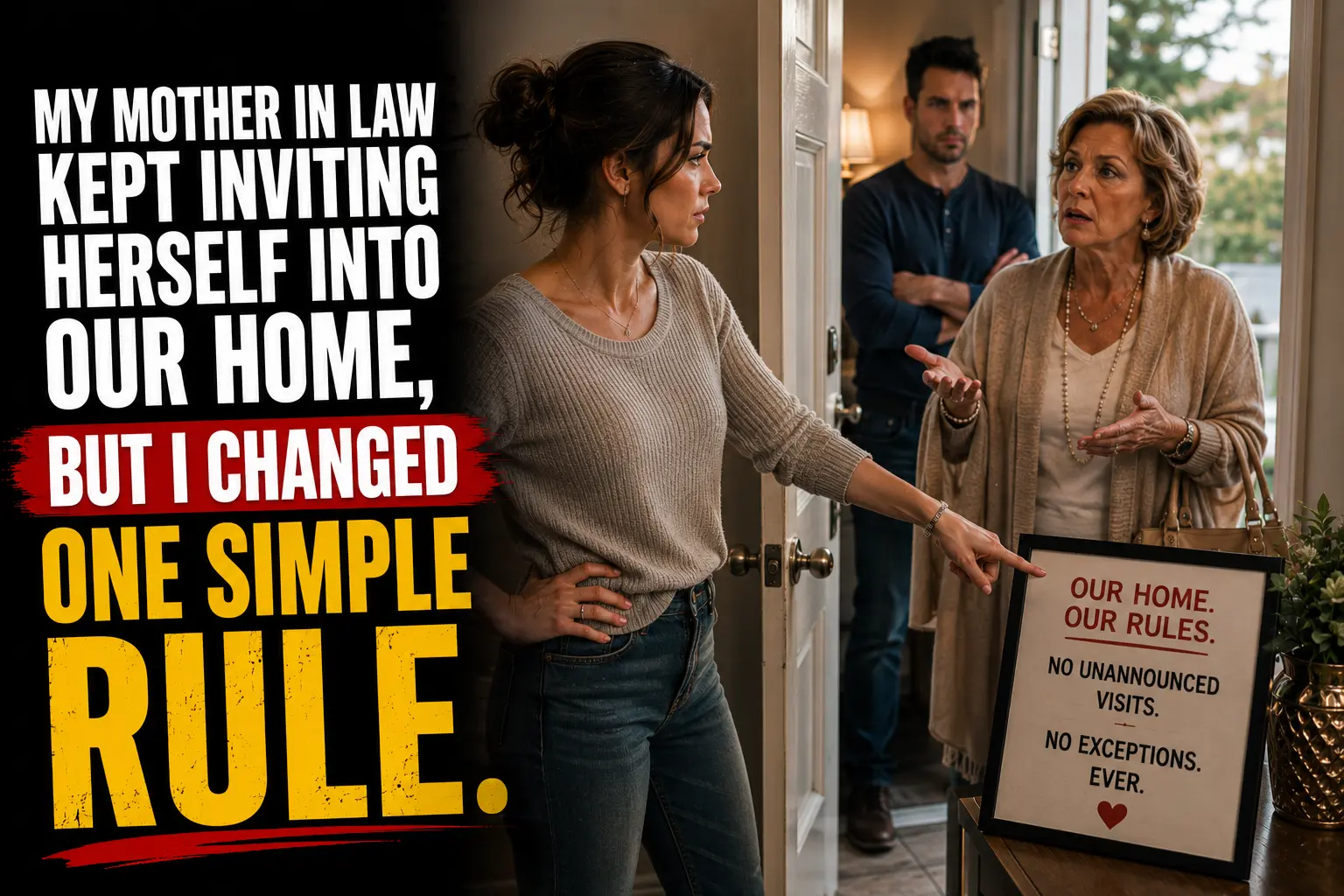
My mother-in-law treated our house like it was an extension of her own.
She let herself in whenever she felt like it.
I tolerated it for months until I changed one simple rule that divided the entire family.
When my spouse and I bought our first home, we were excited to finally create our own routines and enjoy a little independence. At first, I genuinely welcomed my mother-in-law’s visits because I wanted us to have a close relationship. She brought meals, offered decorating advice, and seemed excited for us. Then the visits slowly changed. She stopped calling before coming over. She used the spare key to let herself inside, rearranged furniture, reorganized kitchen cabinets, and sometimes simply announced she was staying for dinner. My spouse always smiled and said, “She’s only trying to help.” Looking back, I stayed quiet because I didn’t want to become the “difficult” in-law everyone warns about. My silence made the situation seem acceptable.
Before long, the surprise visits became part of everyday life. She walked in while I was working from home, relaxing in pajamas, and even when we already had guests. She commented on our groceries, criticized how I cleaned the house, and reorganized drawers without asking. Friends eventually stopped dropping by because they never knew who else might suddenly appear. My own family kept telling me that if I didn’t establish boundaries now, resentment would eventually destroy the relationship. Instead of having an honest conversation, I handled things badly. I started pretending we weren’t home, parked the car somewhere else on weekends, and even avoided spending time in my own house just to escape another unexpected visit. It confused my spouse and solved absolutely nothing. The final straw came when we returned from a weekend away and discovered my mother-in-law had let herself inside to “leave something in the kitchen.” Standing in my own living room, I realized I no longer felt like I had privacy in my own home.
When I brought it up again, my spouse shrugged and said, “That’s just how Mom is.” Hearing that finally changed something inside me. I realized everyone else had accepted a situation that made me deeply uncomfortable except me. I also had to admit my own role in it. I’d never clearly said no because I was afraid of upsetting people. The real problem wasn’t the visits themselves. It was the complete lack of respect for our boundaries. This is our home, not a waiting room for anyone with a key. That was the moment I stopped waiting for someone else to fix it.
Instead of arguing with my mother-in-law, I sat down with my spouse. After a long conversation, we agreed to change the house locks and collect every spare key. Then we introduced one simple rule for everyone—not just her. Every visit had to be arranged in advance unless it was a genuine emergency. No exceptions. When I explained the new boundary to the family, my mother-in-law looked stunned. She said, “So I’m a stranger now?” I calmly replied, “No. You’re family, and that’s exactly why our boundaries should be respected.” I refused to debate it any further, even though I knew some relatives would see the new rule as disrespectful.
My family fully supported the decision and reminded me that every couple deserves privacy in their own home. Friends were divided. Some thought the new boundary was healthy, while others believed changing the locks was unnecessarily dramatic. My spouse admitted they hadn’t realized how uncomfortable I’d become but wished the transition had happened more gently. My mother-in-law insisted I had pushed her out of the family, while several extended relatives quietly admitted they wished they had set similar boundaries years earlier. The argument quickly stopped being about a spare key and became about whether family relationships should ever come without limits.
Our home is finally peaceful, and for the first time it truly feels like ours. Still, family gatherings are different now, and I sometimes wonder whether one simple rule protected our marriage—or permanently changed an important relationship.
Some say I went too far. What would you have done?