
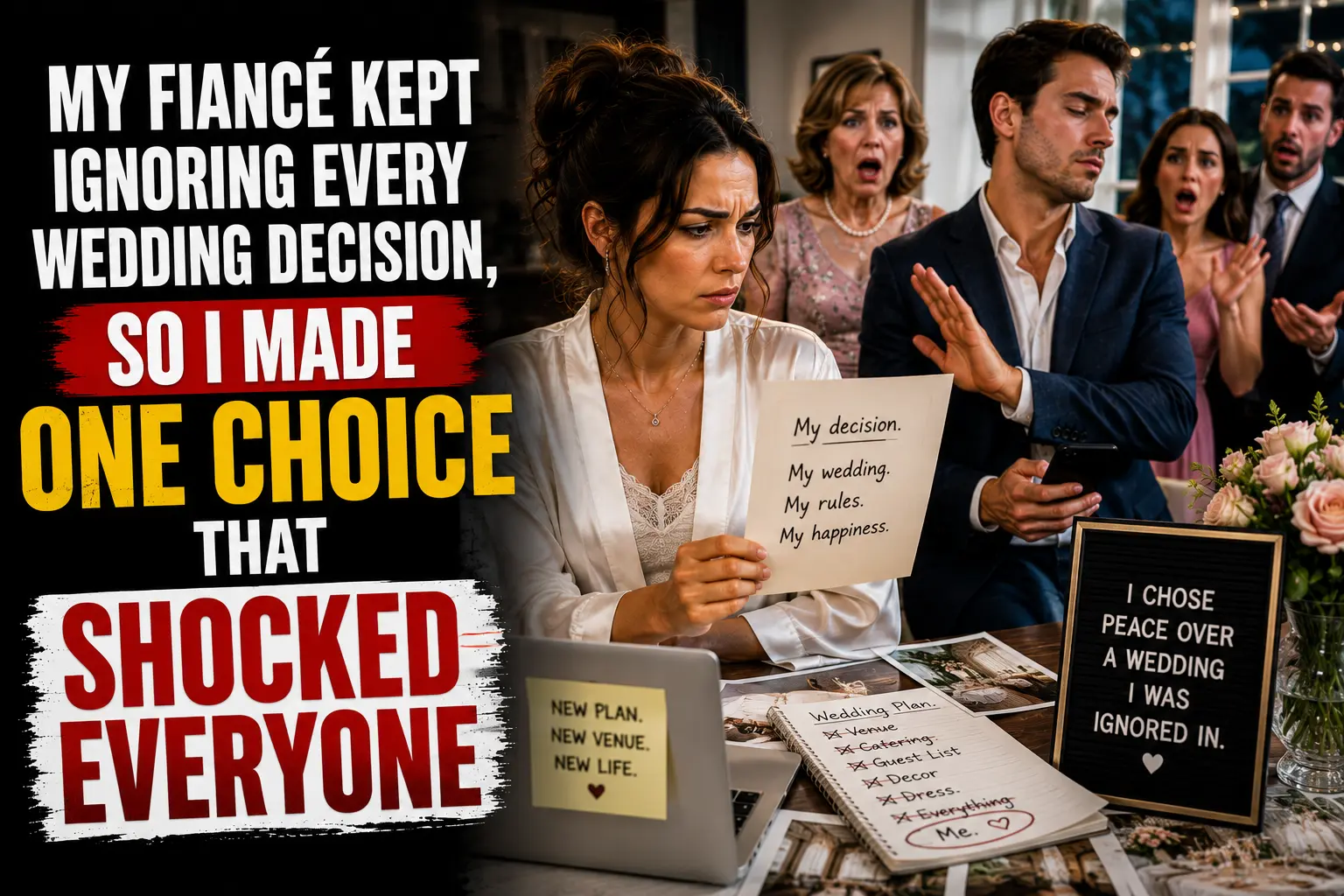
Every time I asked my fiancé about our wedding, the answer was always, “Whatever you want.” At first, I thought they were just being easygoing. Then I realized they had completely checked out, and I made one choice that shocked everyone.
Getting engaged was one of the happiest moments of my life. We spent hours talking about our future and promised we’d make every important decision together. In the beginning, my fiancé seemed genuinely excited about planning the wedding. But as soon as the real work started, their enthusiasm disappeared. They skipped meetings with vendors, ignored messages about deadlines, and answered every question with a shrug or, “Whatever you want.” Friends laughed and said that was normal because one person usually cared more about weddings. But I didn’t want someone who simply showed up on the day—I wanted a partner. Looking back, I made a mistake by taking over almost everything because it seemed easier than constantly chasing their opinion.
The more responsibility I accepted, the less involved my fiancé became. They didn’t care about the venue, the guest list, the budget, or even what the ceremony would look like. Whenever relatives asked wedding questions, everyone turned to me because they knew I was the only one who had the answers. My family noticed how exhausted I looked from carrying the entire planning process by myself. My friends urged me to stop making excuses for someone who wasn’t showing up. Instead of confronting the issue honestly, I handled it badly. I started making small decisions without asking for input, then secretly resented my fiancé for not caring enough to notice. It was unfair, and all it did was make the distance between us even bigger. Eventually, I realized the problem wasn’t flowers or seating charts anymore. The real problem was that we weren’t functioning like partners, and I couldn’t stop wondering if that pattern would continue long after the wedding.
Everything finally came to a head when my fiancé completely forgot an important meeting with our venue. I sat there alone while the coordinator waited for both of us. When I called, they casually said, “We’ll figure it out later.” That sentence hit me harder than I expected. Sitting in that empty chair, I realized I was planning a marriage with someone who wouldn’t even help plan the wedding. I also had to admit something uncomfortable. By taking over every responsibility, I’d helped create a situation where they could disappear without consequences. This is not the marriage I imagined. I knew pretending everything was fine would only make the problem bigger.
Instead of moving forward, I canceled every remaining wedding booking. Then I informed both families that the wedding was postponed indefinitely until we completed couples counseling and both agreed we were equally committed to building a future together. I made that announcement before discussing new dates with anyone because I refused to keep planning a celebration for a partnership that didn’t feel like one. My fiancé looked stunned and said, “You canceled everything?” I answered, “I’m postponing a wedding because I’m trying to save a marriage that hasn’t even started.” I knew some relatives would think I had gone too far.
My family supported the postponement and reminded me that a delayed wedding was far better than a troubled marriage. Friends couldn’t agree. Some praised the decision as incredibly brave, while others believed I should have handled everything privately before canceling the plans. My fiancé admitted they hadn’t realized how abandoned I felt but also argued I should have given them one last chance before making such a public announcement. Both families spent weeks debating whether I had protected my future or embarrassed everyone involved. Before long, the conversation stopped being about centerpieces and invitations and became about whether our relationship had ever been ready for marriage.
I still don’t know whether we’ll ever get married, but I no longer ignore warning signs just because I want a happy ending. Sometimes the hardest decision is admitting love isn’t enough without partnership.
Looking back, I’m still not sure I handled it right.