
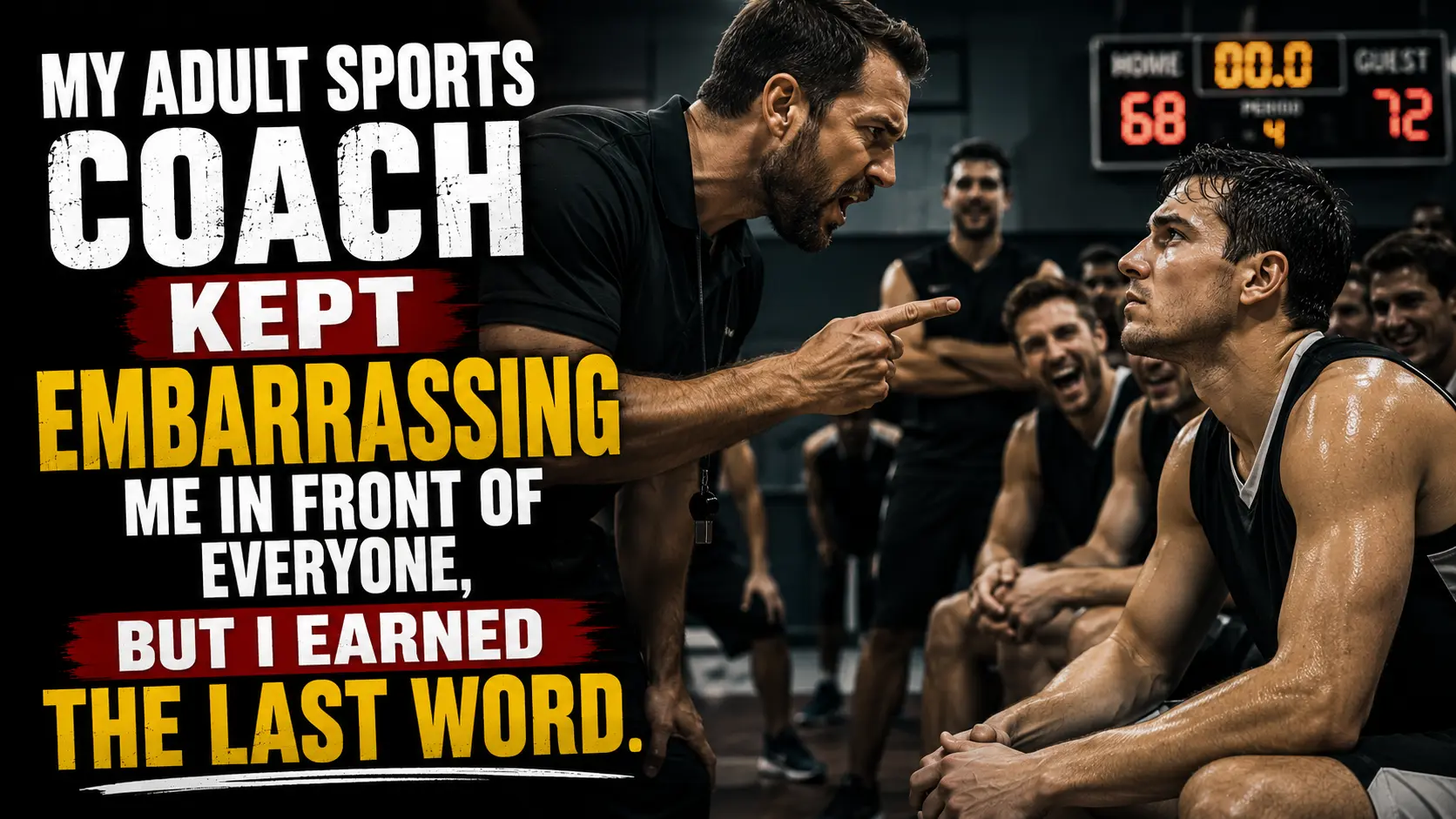
My coach loved calling me out in front of the entire team.
Eventually, everyone started laughing before I even opened my mouth.
I stayed quiet through every humiliation until I earned the last word without saying much at all.
Making that team had been one of the biggest goals of my life. I was determined to earn my place through hard work, even if I wasn’t the most naturally talented athlete. At first, my coach seemed demanding but fair. They pushed everyone, and I respected that.
Over time, though, something changed. Their criticism toward me became personal instead of constructive. Every mistake I made was announced for the whole team to hear, while everyone else received quiet advice off to the side. I convinced myself they were just trying to make me tougher.
Looking back, I stayed silent because I was terrified people would call me weak or say I couldn’t handle coaching. That silence only encouraged the pattern.
Soon every practice felt predictable. My coach mocked small mistakes, questioned my commitment, and constantly compared me to stronger teammates. Even on days when I performed well, someone else received the praise while my smallest error became the team’s entertainment.
Before long, teammates expected me to be the target of every sarcastic joke. My family noticed I was losing confidence and asked why I no longer seemed excited about the sport I once loved. Friends urged me to transfer teams or report my coach.
Instead of addressing the real problem, I made my own mistakes. I became frustrated and snapped at teammates after practice, even though most of them weren’t responsible for what was happening. That damaged friendships and made me look difficult to be around.
My performances got worse because I spent every drill worrying about embarrassment instead of improvement. Eventually, I realized proving my coach wrong would matter far more than arguing with them.
The breaking point came during an important practice before our biggest competition of the season. In front of everyone, my coach shook their head and said, “You’re not ready for this level, and you probably never will be.”
The team went silent.
Hearing those words in front of everyone made something finally click inside me. I realized I had spent months chasing approval from someone who seemed determined never to give it.
I also admitted something uncomfortable. My emotional reactions had distracted me from becoming the athlete I wanted to be.
This is the athlete I choose to become—not the one someone else describes.
From that moment on, I stopped training for validation and started training for results.
I didn’t argue. I didn’t complain. I trained harder than I ever had before, arriving early, staying late, and letting official performance evaluations speak for me.
When the final selections were announced, I earned a starting position based entirely on measurable results. After helping the team achieve its best finish of the season, I thanked every teammate who had supported me and respectfully acknowledged the coaching staff.
I never mentioned the humiliation or tried to embarrass my coach in return.
They quietly congratulated me afterward.
I simply replied, “The work speaks for itself.”
I knew some teammates thought I should have publicly confronted the coach after proving them wrong.
My family said they were proud that I let my performance answer the criticism instead of my anger. Friends couldn’t agree. Some admired my restraint, while others believed I missed the perfect opportunity to hold my coach accountable.
My coach congratulated me but never admitted how harsh they had been throughout the season. Several teammates privately apologized for laughing during those earlier practices, admitting they had followed the crowd instead of speaking up.
The respect I received from the team changed completely, even though my relationship with my coach remained distant and professional.
I finally earned the respect I’d been fighting for, but I still wonder whether staying silent showed real strength—or whether speaking up might have protected the next athlete from going through the same thing.
Looking back, I’m still not sure I handled it right.