
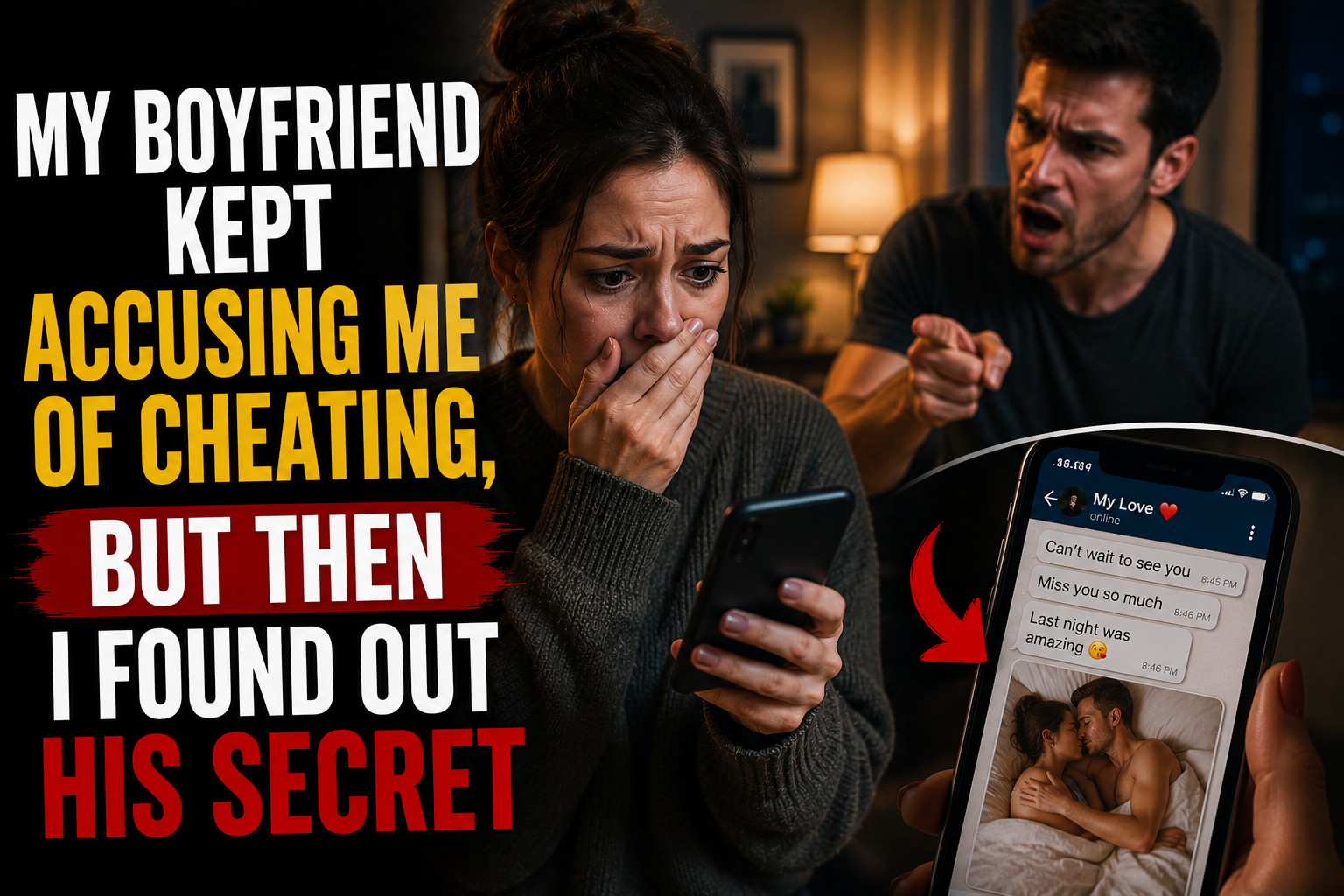
My boyfriend accused me of cheating so often that I started changing how I dressed, who I talked to, and where I went. I kept trying to prove my innocence. Then I discovered the secret he was desperate to hide. When we first started dating, my boyfriend seemed protective rather than controlling. At first, he only asked casual questions about male coworkers, old friends, and people who messaged me. Gradually, those questions became accusations. He demanded explanations for late replies, unexpected plans, and harmless conversations. I kept reassuring him because I knew he’d been hurt in a previous relationship. Looking back, I became so focused on proving I was trustworthy that I stopped asking whether his behavior was fair. I thought patience would make him feel secure. Instead, every reassurance became permission for another interrogation.
The accusations became part of our daily routine. He checked when I was online, questioned why I dressed up for work, and treated every unfamiliar name like evidence. Friends noticed I had stopped attending certain gatherings because avoiding arguments felt easier. My family warned me that constantly defending myself wasn’t normal. Instead of setting a firm boundary, I made things worse. I started hiding innocent interactions and deleting harmless messages because I couldn’t handle another interrogation. When he noticed, I looked exactly as suspicious as he claimed I was. I also became defensive and accused him of controlling me whenever he asked ordinary questions. Our relationship turned into surveillance and counter-accusations. Then I noticed he guarded his own phone obsessively and disappeared for hours without offering the explanations he demanded from me. For the first time, I wondered whether keeping me under suspicion was helping him hide something.
Eventually, I discovered he had been secretly seeing someone else while accusing me of cheating for months. Suddenly, every interrogation looked like projection. I realized keeping me constantly defensive had stopped me from examining his behavior. I wasn’t the unfaithful partner desperately trying to look innocent. I was the distraction from what he was doing. But I also had to admit my own choices mattered. Deleting innocent messages had added dishonesty to an already toxic relationship. My realization was simple: I had spent months trying to prove myself to someone who was using my fear to protect his secret. I stopped caring about convincing him I had been faithful.
Instead of confronting him privately, I invited him to a small gathering with mutual friends who had repeatedly heard his accusations against me. When he made another joke about not trusting me, I calmly showed the evidence of his secret relationship. His face changed instantly. He snapped, “You had no right to expose my private life.” I looked at him and said, “You made my loyalty public every time you accused me. Now your betrayal can be public too.” Then I ended the relationship in front of everyone and walked away. He spent months putting me on trial. I made sure the final evidence wasn’t against me.
My family supported ending the relationship but questioned why I’d tolerated the accusations for so long. Friends were divided. Some believed he deserved to be exposed, while others thought I’d deliberately staged his humiliation. My ex-boyfriend accused me of invading his privacy and claimed my secrecy had contributed to our problems. My closest friend supported me but admitted the confrontation permanently divided our social circle. Even mutual friends couldn’t agree whether revealing his secret publicly was accountability or retaliation. I no longer spend my life proving my innocence, but I still wonder whether exposing his betrayal gave me justice or simply gave me revenge. I know leaving was right. I’m less certain that making everyone watch was. Half of them are proud of me, the other half won’t speak to me.