
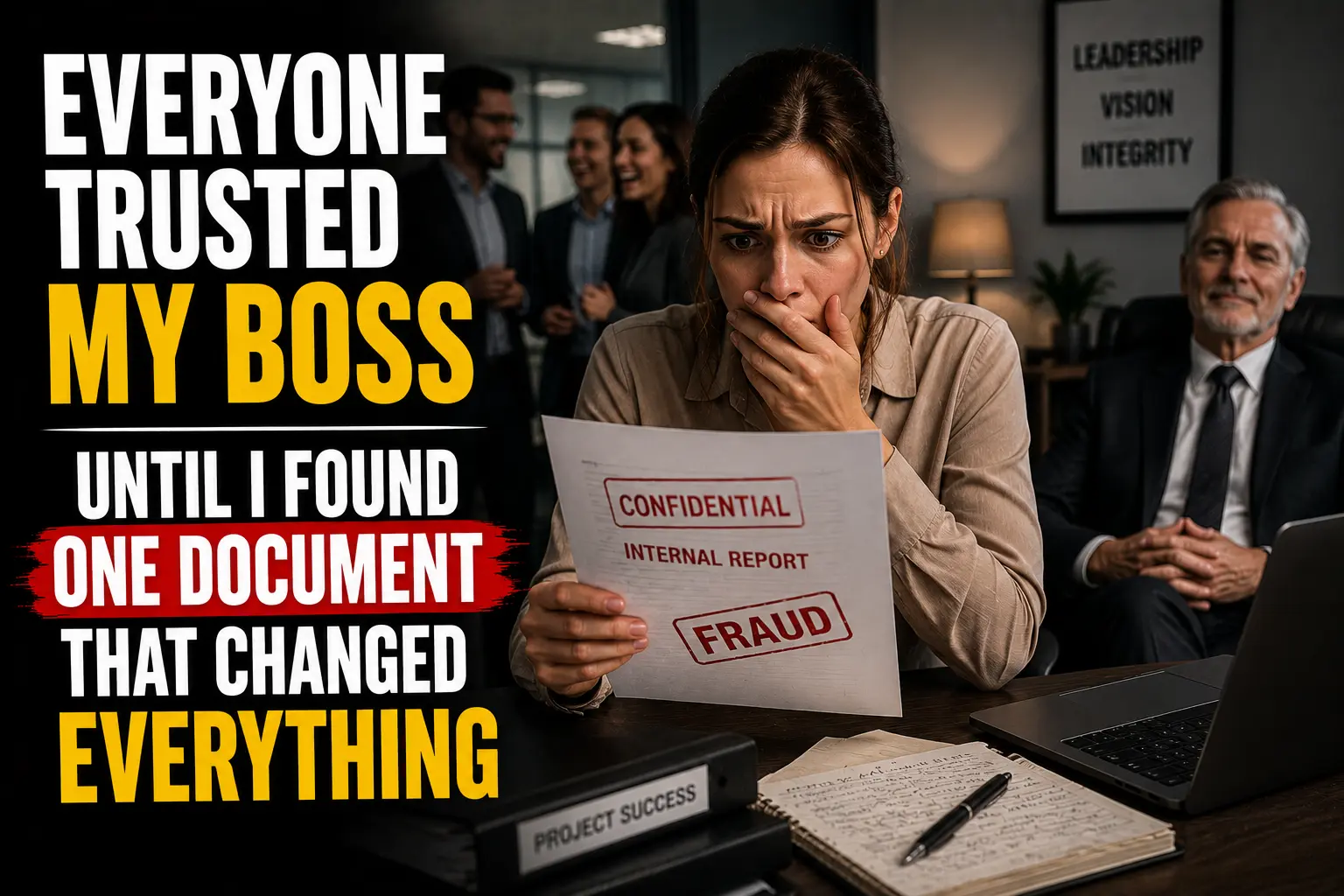
Everyone in the company trusted my boss. Questioning him was treated like questioning the company itself. I trusted him too until I found one document proving our biggest success had been built on a lie. My boss had spent years building a reputation as a fair leader who protected employees and rewarded loyalty. He remembered birthdays, defended our team during difficult projects, and seemed more trustworthy than most executives I’d worked with. I admired him and rarely questioned his decisions. Because I handled project records, I occasionally saw confidential documents other employees never accessed. Looking back, I wasn’t completely innocent. I became too comfortable with that access and sometimes opened files out of curiosity even when they weren’t necessary for my work. That questionable habit eventually led me to something I couldn’t ignore.
I found a document showing my boss had knowingly changed project numbers before presenting them to senior leadership. At first, I convinced myself there had to be an innocent explanation. Then I compared it with earlier reports and found several inconsistencies. Friends outside work warned me not to risk my career over something I didn’t fully understand. My family encouraged me to report it through proper channels. Instead, I kept searching. I quietly opened more files without authorization, telling myself I needed stronger proof. I discovered emails suggesting my boss had pressured employees to hide costly mistakes while taking credit for inflated results. My secret investigation crossed professional boundaries, but I continued anyway. Then my boss announced another major company success using numbers I knew were misleading. People applauded. I sat there knowing the celebration depended on information that had been manipulated. That’s when staying silent started feeling like participation.
During the company celebration, I watched coworkers praise my boss for protecting jobs and delivering record results. I realized their loyalty depended on information they’d never been allowed to see. I wasn’t just an employee holding confidential records anymore. I was someone deciding whether protecting my career mattered more than exposing the truth. But I also had to admit I’d obtained some evidence by accessing documents I wasn’t authorized to review. Reporting him could expose my own misconduct and cost me my job. My realization was simple: the truth doesn’t become clean just because the person exposing it believes they’re right. I decided staying silent was still worse.
Instead of confronting my boss, I sent the original document and supporting records to the company’s internal compliance department and requested a formal investigation. I also disclosed exactly how I’d discovered and accessed the additional files. When my boss began demanding to know who had reported him, I refused to participate in rumors or defend myself publicly. Later, he confronted me and asked, “Did you really think destroying this department made you a hero?” I answered, “If one document can destroy everything you built, then maybe the document wasn’t the real problem.” I knew the investigation could damage innocent careers. I triggered it anyway.
My family supported reporting the document but criticized me for searching through files I wasn’t authorized to access. Friends were divided. Some called me courageous, while others believed I’d risked innocent coworkers’ jobs to satisfy my own sense of justice. My partner supported telling the truth but worried my methods could permanently damage my career. The investigation confirmed serious reporting irregularities, and my boss was removed from leadership. Several coworkers thanked me privately. Others blamed me for destroying a team they had trusted and refused to speak to me afterward. The company corrected the false reports, but my own future there became uncertain because of how I found the evidence. I exposed the truth, yet I can’t pretend breaking rules to uncover it left my hands completely clean. Tell me honestly—did I cross a line, or did they deserve it?