
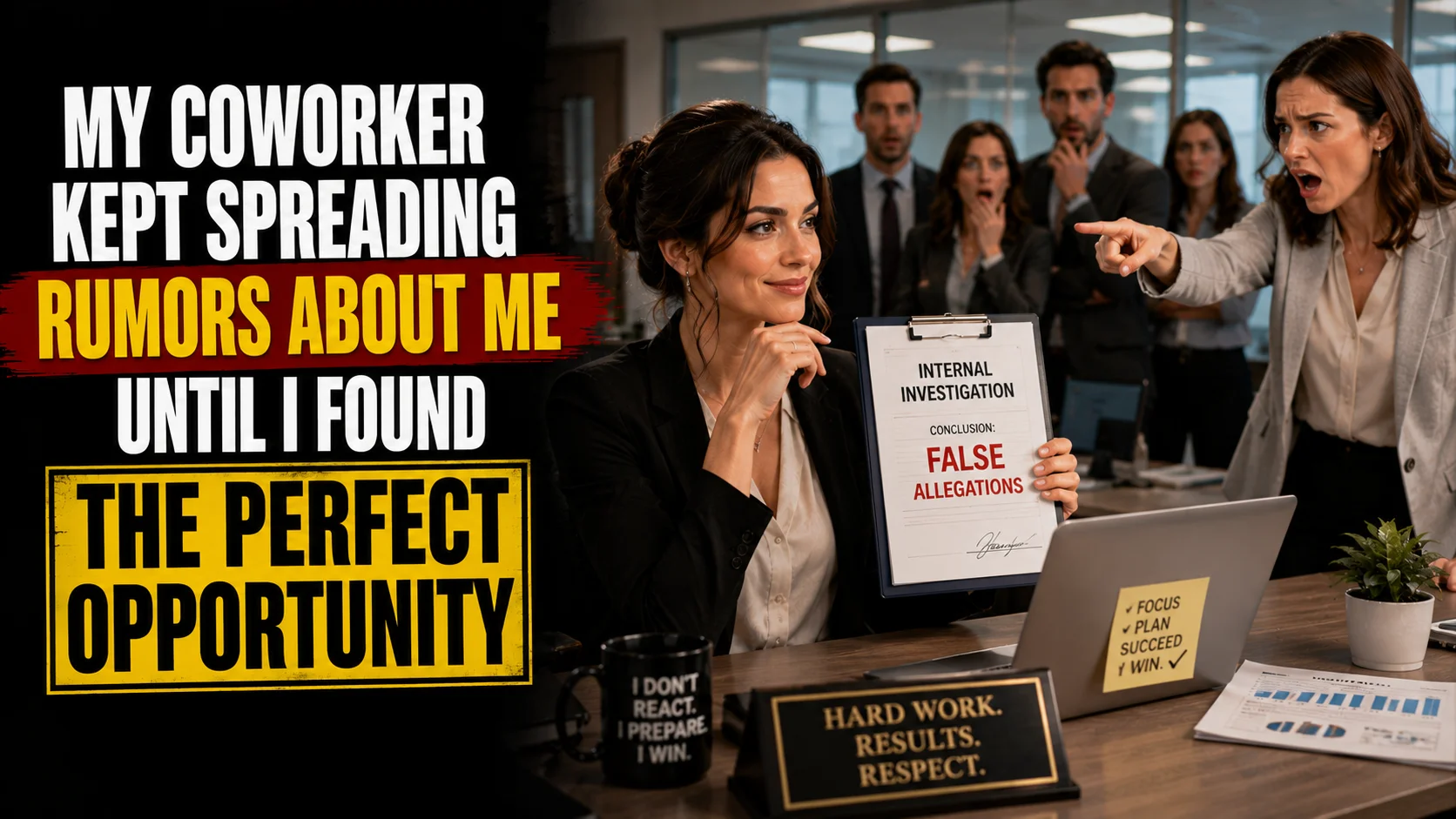
I couldn’t understand why people at work suddenly started avoiding me. Conversations stopped the moment I walked into the room. I stayed silent far longer than I should have—until one opportunity changed the entire office overnight.
I had always loved my job and got along with almost everyone on my team. When a new coworker joined, they seemed friendly, helpful, and eager to collaborate. We worked together on several projects, and I honestly thought we’d become good teammates. Then things slowly started changing. Coworkers became distant, lunch invitations disappeared, and conversations would suddenly end when I walked by. Whenever I asked if something was wrong, everyone smiled and insisted everything was fine. Looking back, I ignored the warning signs because I couldn’t believe someone would deliberately try to damage my reputation. That hesitation gave the rumors plenty of time to spread.
Before long, the gossip became impossible to ignore. Coworkers started questioning my professionalism, and my manager seemed to watch my work much more closely than before. The strange part was that my teammate always acted supportive whenever we spoke, yet somehow they knew about every rumor before anyone else did. Friends outside work told me to report the situation immediately. My partner noticed I came home exhausted, frustrated, and constantly doubting myself. Instead of handling things calmly, I made my own mistakes. I confronted a few coworkers I wrongly assumed were involved, and they were understandably upset. Looking back, I probably pushed away people who might have supported me.
Then one afternoon, I overheard my coworker repeating another completely false story about me in the break room. That’s when I realized the gossip wasn’t random at all. Someone was planting it on purpose. I stopped arguing with people and decided I needed evidence instead of assumptions.
While preparing for an important team meeting, I came across messages, email threads, and project conversations that confirmed my coworker had been the source of several false rumors. Reading everything together made one thing painfully obvious. Trying to defend myself one person at a time would never repair the damage. I also had to admit something uncomfortable. My emotional reactions over the past few months had probably made some of the gossip seem believable. This is not who I am. From that day forward, I stopped trying to win arguments and started documenting facts.
I waited until a scheduled meeting about improving team communication. When management asked whether anyone had suggestions, I politely requested permission to review a documented timeline of messages, project communications, and conversations that had directly affected teamwork. I presented only verifiable evidence and avoided personal attacks. My coworker looked shocked as managers asked question after question based on the documentation. Finally, they said, “You’re trying to embarrass me.” I calmly replied, “I’m not here to embarrass anyone. I’m here to stop correcting lies one conversation at a time.” Then I sat down and let the evidence speak for itself. I knew some people would think I should have handled everything privately.
My family supported my decision and said I had finally protected my reputation. Friends were divided. Some praised how professionally I handled the situation, while others believed addressing it during a team meeting made reconciliation impossible. My partner agreed I had done the right thing but wondered if waiting so long had allowed the rumors to spread further than they ever should have. Management introduced new expectations for professional communication and documentation after the meeting. My coworker denied acting maliciously, but several teammates quietly admitted they had suspected the pattern for months and simply hadn’t known how to address it.
My reputation slowly recovered, and work finally felt normal again. Even so, I still wonder whether choosing such a public moment to reveal the truth delivered justice—or simply mirrored the workplace drama I had wanted to escape.
Some say I went too far. What would you have done?